Mexico Manufacturing: What You Need to Know About the IMMEX Program
📅 February 10, 2026
🖋️ AIG Insights Team


Mexico’s manufacturing sector exported a record $664.84 billion in goods during 2025, marking sustained growth in output. Behind much of that output sits a single regulatory framework that most foreign executives have heard of but few fully understand: the IMMEX program.
The Programa de la Industria Manufacturera, Maquiladora y de Servicios de Exportación — known as IMMEX — is the legal backbone of export manufacturing in Mexico. The program encompasses thousands of active establishments employing millions of workers and generating substantial monthly revenues. IMMEX companies account for the vast majority of Mexico’s manufacturing exports and represent a significant share of the country’s formal employment.
For foreign manufacturers evaluating nearshoring opportunities, understanding IMMEX is not optional — it determines how raw materials enter the country, how import duties are managed, how VAT obligations are structured, and whether a company triggers permanent establishment status in Mexico. This guide covers the program’s mechanics, its five operating modalities including the shelter category, recent regulatory changes reshaping the landscape in 2025–2026, and how IMMEX interacts with the USMCA trade agreement.

What Is the IMMEX Program?
IMMEX is a federal government program launched on November 1, 2006, by the Secretaría de Economía. It consolidated two earlier frameworks — the Maquiladora Program (established in 1965) and the PITEX program (Temporary Import Program for Exporting) — into a unified system designed to attract foreign investment and support export-oriented manufacturing in México.
The core mechanism is straightforward: IMMEX authorizes registered companies to temporarily import raw materials, components, machinery, and equipment into México without paying the General Import Tax (IGI) or the Value Added Tax (VAT), provided the resulting goods or services are destined for export. Companies are not required to pay these taxes upfront, which significantly improves cash flow and reduces operational costs compared to standard importation.
The program is administered by the Secretaría de Economía, while tax compliance and audit functions fall under the SAT (Servicio de Administración Tributaria) and the ANAM (Agencia Nacional de Aduanas de México). Since 2006, IMMEX has become one of the most significant drivers of foreign direct investment into México, particularly in sectors such as automotive, electronics, aerospace, and medical devices.
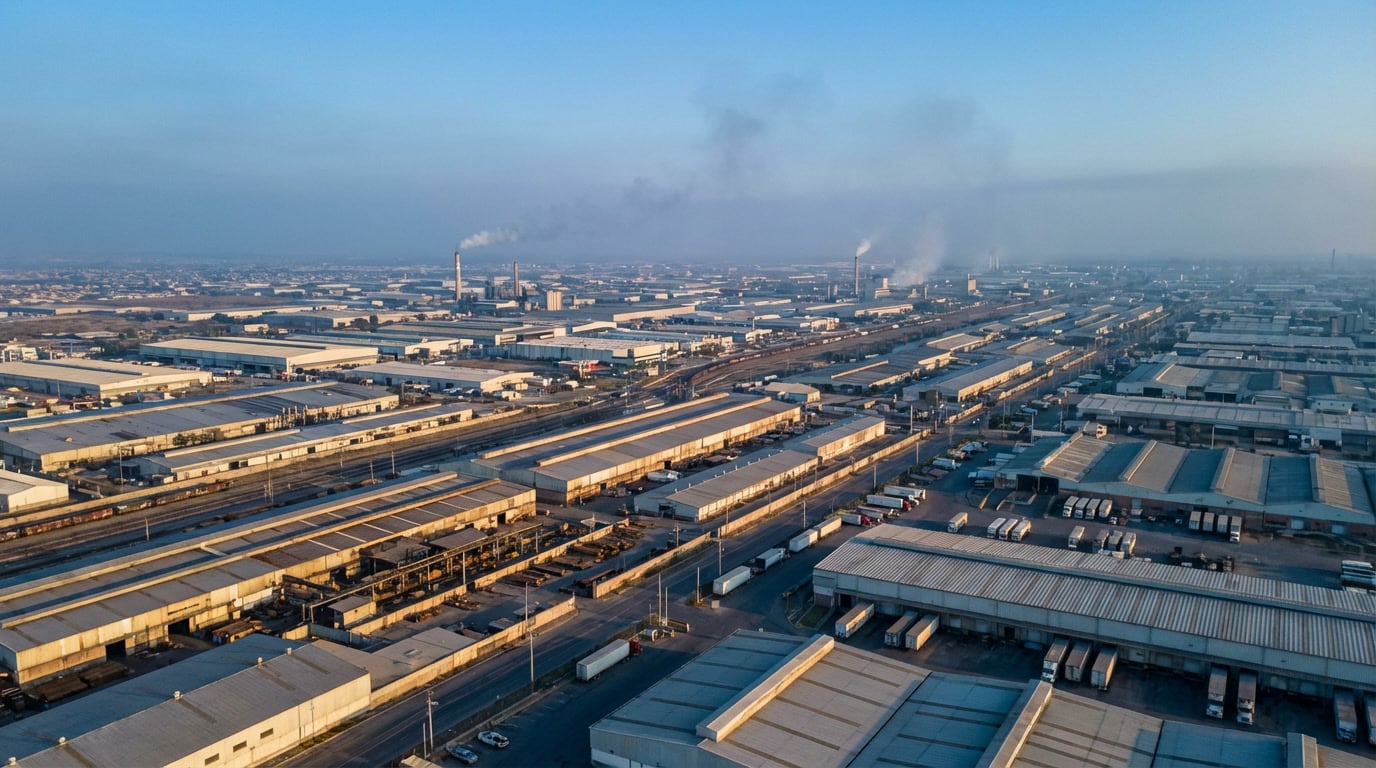
IMMEX by the Numbers — Scale and Economic Impact
The program’s reach across México’s industrial landscape is substantial.
National Footprint
Thousands of establishments hold active IMMEX registrations, spanning both manufacturing and non-manufacturing activities. These operations employ millions of workers, with manufacturing accounting for the overwhelming majority of those positions. The program is heavily concentrated in northern border states: Baja California, Nuevo León, Chihuahua, and Coahuila lead in establishment counts. These states, along with Tamaulipas and Jalisco, concentrate the majority of all IMMEX employment nationally.
Sector Composition
Transportation equipment manufacturing — covering automotive, aerospace, and rail components — is the dominant IMMEX sector, leading in establishments, workforce, and monthly revenue. Electronics and computer equipment follows as a major subsector with a large workforce, notable for its extraordinarily high export orientation: the vast majority of sector revenue comes from foreign markets. Plastics and rubber, electrical equipment, and metal products round out the top five manufacturing categories.
Export Contribution
IMMEX companies generate the vast majority of México’s manufacturing exports, with a significant share of revenues coming from foreign markets. The automotive sector alone — the largest IMMEX subsector — accounts for a substantial portion of total national exports and a meaningful share of GDP.
Wage Trends
Although total IMMEX employment has experienced modest adjustments, average real wages have risen. Directly contracted IMMEX manufacturing workers have seen wage increases across all categories — reflecting a compositional shift toward higher-skilled positions and the ongoing impact of national minimum wage increases.

Key Benefits for Foreign Manufacturers
IMMEX offers a layered set of fiscal and operational advantages that collectively reduce the cost structure and regulatory burden of manufacturing in México.
Temporary Import Duty Deferral
The program’s foundational benefit is the ability to import raw materials, components, and production equipment without paying import duties or VAT at the point of entry. These taxes are deferred — not eliminated — and only become payable if and when goods are permanently imported (i.e., sold domestically rather than exported). For raw materials and components, the authorized temporary import period is 18 months. Production machinery and equipment may remain in the country for the duration of the IMMEX program — effectively indefinitely while the permit remains active.
VAT Credit Through IVA/IEPS Certification
IMMEX registration alone defers duties but does not fully resolve the VAT obligation on temporary imports. The complementary mechanism is the IVA/IEPS Certification (Registro en el Esquema de Certificación de Empresas), administered by the SAT. This certification provides a full tax credit for VAT and IEPS on qualifying temporary imports.
The certification operates across three tiers. Rubro A requires a minimum of 12 months of IMMEX operations and at least 10 IMSS-registered workers, with annual renewal. Rubro AA requires 4 or more years of operations or a substantial IMSS workforce, with an extended 36-month temporary import period. Rubro AAA requires 7+ years or a significantly larger workforce, adding consolidated customs processing privileges. The number of companies holding active IVA/IEPS certifications has declined in recent periods due to more rigorous renewal processes.
Permanent Establishment Protection
For foreign companies operating through the shelter modality, IMMEX provides a mechanism to manufacture in México without triggering permanent establishment (PE) status. Following the 2020 tax reform, the previous four-year limit on PE protection was eliminated. Foreign companies can now operate indefinitely through a compliant shelter provider without creating a taxable presence in México, provided the shelter meets Safe Harbor profitability thresholds.
Under Safe Harbor — the sole applicable tax methodology since the elimination of Advance Pricing Agreements (APAs) — the shelter’s minimum taxable profit must equal the higher of a defined percentage of total asset value used in the operation or a defined percentage of total costs and expenses, as established by applicable regulations.
Access to PROSEC
IMMEX participants can complement their registration with the Sectorial Promotion Program (PROSEC), which reduces or eliminates import duties on specific inputs across 24 defined industrial sectors. PROSEC rates are set well below standard Most Favored Nation tariffs. This mechanism becomes particularly valuable when IMMEX companies sell finished goods domestically — the deferred duty becomes payable upon regime change, but PROSEC reduces that amount to a fraction of the full rate.
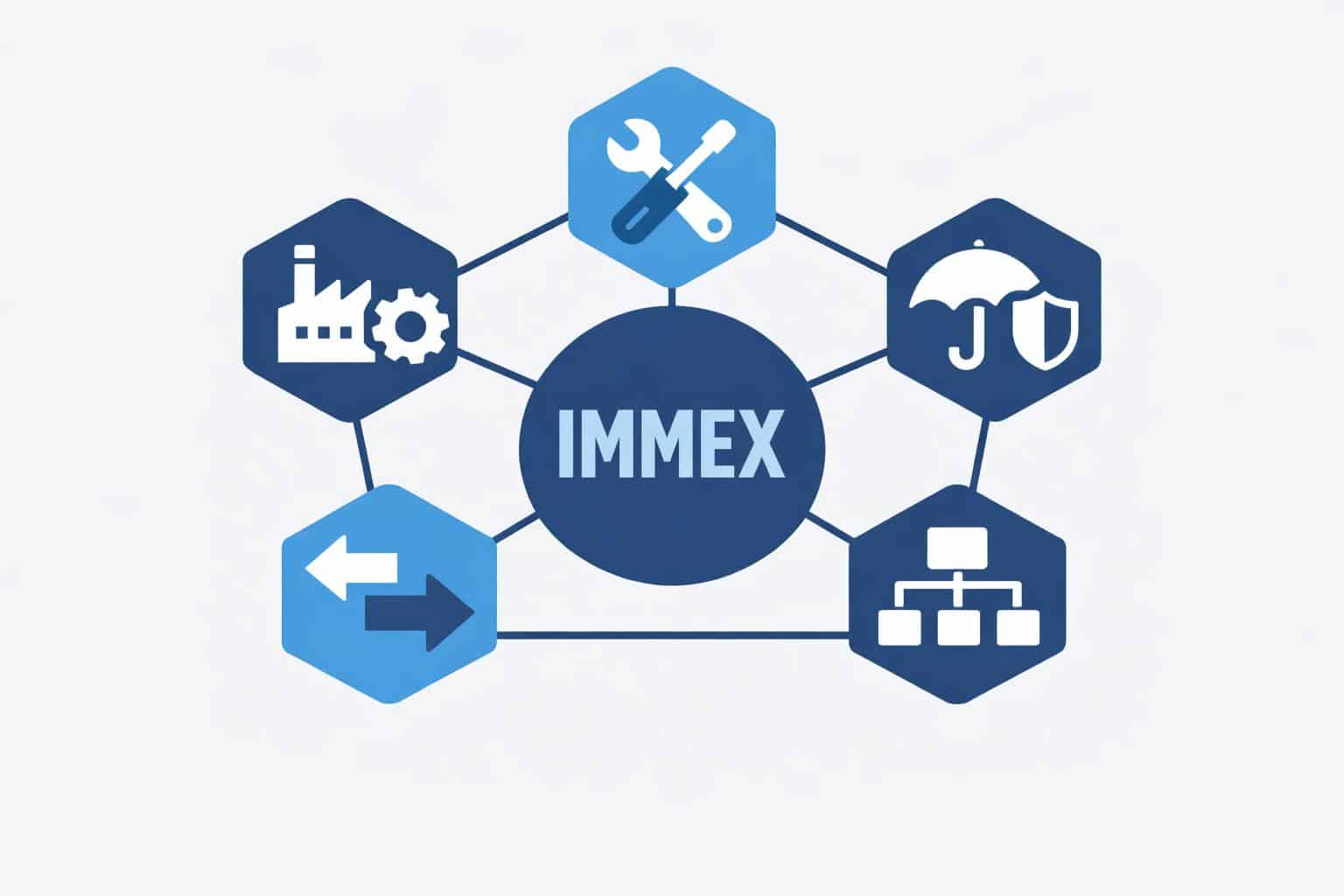
The Five IMMEX Modalities
The IMMEX Decree establishes five registration categories, each designed for different operational models:
Industrial — The dominant modality, representing the vast majority of active programs. Direct registration for manufacturers importing goods for industrial processes that produce export goods. This is the standard modality for companies operating their own manufacturing facilities in México.
Services — The second-largest category. For companies providing services linked to export manufacturing, including software development, repair services, recycling operations, and other service activities connected to exported goods.
Shelter — A small but strategically significant share of total registrations. Designed for Mexican shelter providers that act as the legal and fiscal umbrella for foreign manufacturers. Despite representing a small fraction of total registrations, shelters play a disproportionately strategic role in nearshoring by allowing foreign companies to begin manufacturing in México without establishing their own legal entity, tax ID, or direct employees on a Mexican payroll.
Manufacturing Partnership — A very limited number of programs. Allows certified companies without manufacturing facilities to carry out production through a third party registered under their program.
Holding Company — The smallest category. Permits a holding company and one or more subsidiaries to operate under a single IMMEX program.
The shelter modality has received growing attention as nearshoring accelerates. Under this arrangement, the shelter company holds the IMMEX registration and manages all administrative infrastructure — human resources, tax compliance, customs operations, Annex 24 inventory control, and facilities management. The foreign manufacturer retains complete ownership and control of production processes, equipment, raw materials, intellectual property, and commercial strategy. This division of responsibilities allows manufacturers to begin operations significantly faster than a standalone entity formation, which typically requires 8 to 12 months for legal incorporation, permit acquisition, facility setup, and workforce recruitment.

Recent Regulatory Changes Reshaping IMMEX (2024–2026)
The IMMEX landscape is undergoing its most significant transformation since the program’s 2006 launch. Several concurrent regulatory shifts demand attention from current and prospective participants.
IMMEX 4.0 Under Plan México
Announced as part of President Claudia Sheinbaum’s Plan México on January 13, 2025, IMMEX 4.0 represents a comprehensive modernization initiative. The redesign is structured around four pillars: facilitating foreign trade through digitalization, fostering import substitution to increase national content, generating 1.5 million manufacturing jobs, and strengthening strategic sectors including semiconductors, automotive, textiles, and technology.
A central objective is a 50% reduction in authorization and startup times for new IMMEX companies, primarily through unifying the currently separate IVA/IEPS certification process with the IMMEX program authorization. As of early 2026, no formal IMMEX 4.0 decree has been published — the initiative remains in an advanced consultation and design phase, with the Secretaría de Economía, INDEX, and AMCHAM conducting joint working sessions.
Annex 24 Inventory Control Overhaul
Annex 24 of the General Foreign Trade Rules was amended in two phases. The changes require IMMEX companies to update their automated inventory control systems within 48 hours of customs dispatch completion and to provide the customs authority (AGACE) with online access to these systems, including user credentials and instructional documentation. Non-compliance consequences include significant fines, liability for deferred VAT and import duties on unaccounted materials, and potential suspension or cancellation of IMMEX and IVA/IEPS certifications.
Textile and Footwear Import Restrictions
The Secretaría de Economía published a decree adding goods under Chapters 61, 62, and 63 (apparel and made-up textile articles) to Annex I of the IMMEX Decree — the list of goods that cannot be temporarily imported under the program. This restriction is indefinite. Simultaneously, temporary tariff increases of 15% to 35% were imposed on textile products from countries without free trade agreements with México, effective until April 23, 2026.
A provisional exemption was issued for companies meeting specific requirements, including active IVA/IEPS certification, Annex 24 Section C compliance, and prior tariff fraction import history. The restrictions were subsequently expanded to include finished footwear.
Enforcement Escalation
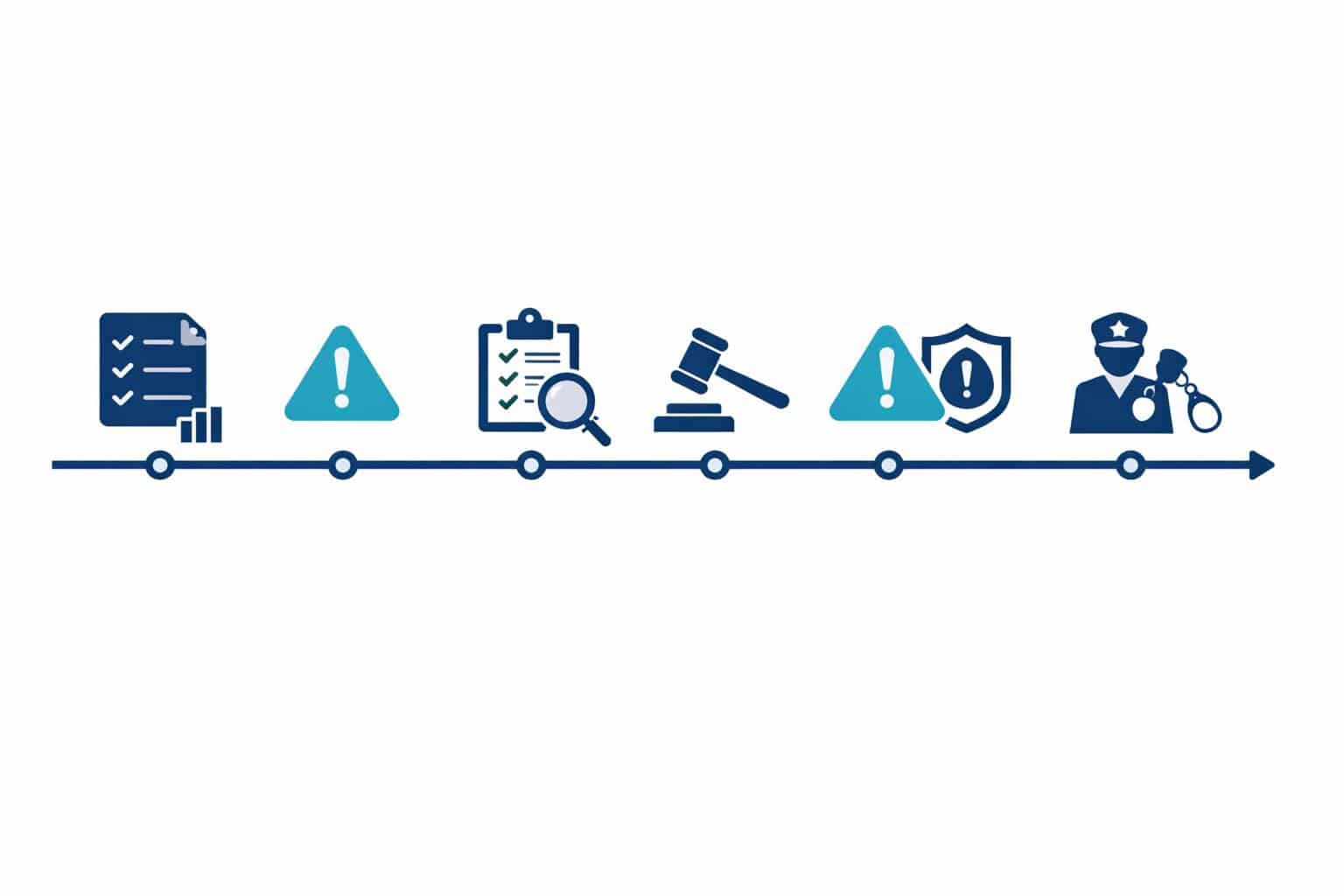
Enforcement activity has intensified significantly. On September 30, 2025, the Secretaría de Economía published the official list of 170 IMMEX programs cancelled for non-compliance — primarily failure to submit annual reports or maintain active fiscal addresses. Beyond formal cancellations, over 600 IMMEX programs were suspended during 2025 for operational inconsistencies and documentary non-compliance.
Adding to the enforcement posture, México’s Customs Law reforms effective January 1, 2026, expanded IMMEX obligations to include enhanced documentation requirements — covering financial flows, contracts, logistics costs, and productive process records — with irregularities now potentially triggering criminal investigations rather than administrative penalties alone.

How IMMEX Interacts with USMCA
For manufacturers exporting to the United States and Canada, the relationship between IMMEX duty deferral and USMCA rules of origin requires careful management.
Article 2.5 of the USMCA (replacing NAFTA Article 303) limits the duty deferral benefit when IMMEX companies import non-USMCA-originating materials for use in products exported to the United States or Canada. Under this rule, the company may not receive a duty exemption exceeding the lesser of: (a) the import duties owed on the non-originating materials in México, or (b) the import duties that would be payable in the USMCA destination country on the finished goods.
This “lesser of the two” rule prevents México from functioning as an export platform for non-regional materials to enter the USMCA market duty-free. However, Mexican policymakers designed two instruments to mitigate this limitation:
PROSEC reduces the base tariff on non-originating materials to preferential levels across 24 industrial sectors. When the Mexican tariff on imported components is near zero through PROSEC, the Article 2.5 calculation yields minimal or zero liability, effectively preserving full duty deferral.
Rule 8 (Regla Octava) provides a license to import under México’s HS heading 98 at duty-free rates, available to companies with PROSEC registration. Combined, these mechanisms allow IMMEX companies to maintain cost-effective operations even when exporting USMCA-bound goods containing non-regional content.
It is important to note that Article 2.5 does not apply to goods exported to non-USMCA countries — full duty deferral benefits remain available for exports to Europe, Asia, and all other markets.
Requirements and Application Process
Who Can Apply
IMMEX is available to Mexican legal entities engaged in manufacturing, transformation, repair, or services activities destined for export. Eligibility requirements include an active RFC (Federal Taxpayer Registry), advanced electronic signature (e.firma), favorable SAT compliance opinion for the company, legal representative, and all shareholders, and absence from SAT’s restricted taxpayer registries. Companies must demonstrate sufficient export capacity and a meaningful share of export revenue relative to total annual revenue.
Documentation and Submission
Applications are submitted electronically through VUCEM (Ventanilla Única de Comercio Exterior Mexicano) and must include a detailed description of manufacturing processes and installed production capacity, tariff classifications for goods to be imported and exported, facility documentation with proof of legal possession and photographs, export contracts or purchase orders, and an investment program with layouts, headcount, and estimated import volumes. A site inspection by the Secretaría de Economía — sometimes jointly with the SAT — verifies installed production capacity before approval is granted.
Timeline Realities
The statutory review period is 15 business days from complete submission, though alternative official references cite 45 days. In practice, well-prepared applications may achieve approval within 4 to 12 weeks, while the full process from initial preparation to operational approval typically spans 6 to 12 months. Current processing times reflect increased regulatory scrutiny — delays exceeding 40 days have become common, and overall authorization volumes have declined.
Ongoing Obligations
Maintaining an IMMEX program requires continuous compliance: annual electronic reports (RAOCE) filed by the last business day of May, Annex 24 automated inventory control with 48-hour update windows, maintenance of the required export threshold, timely notification of corporate or address changes, and favorable SAT compliance status at all times. Failure to file the annual report triggers suspension; failure to cure by August leads to permanent cancellation effective September 1.
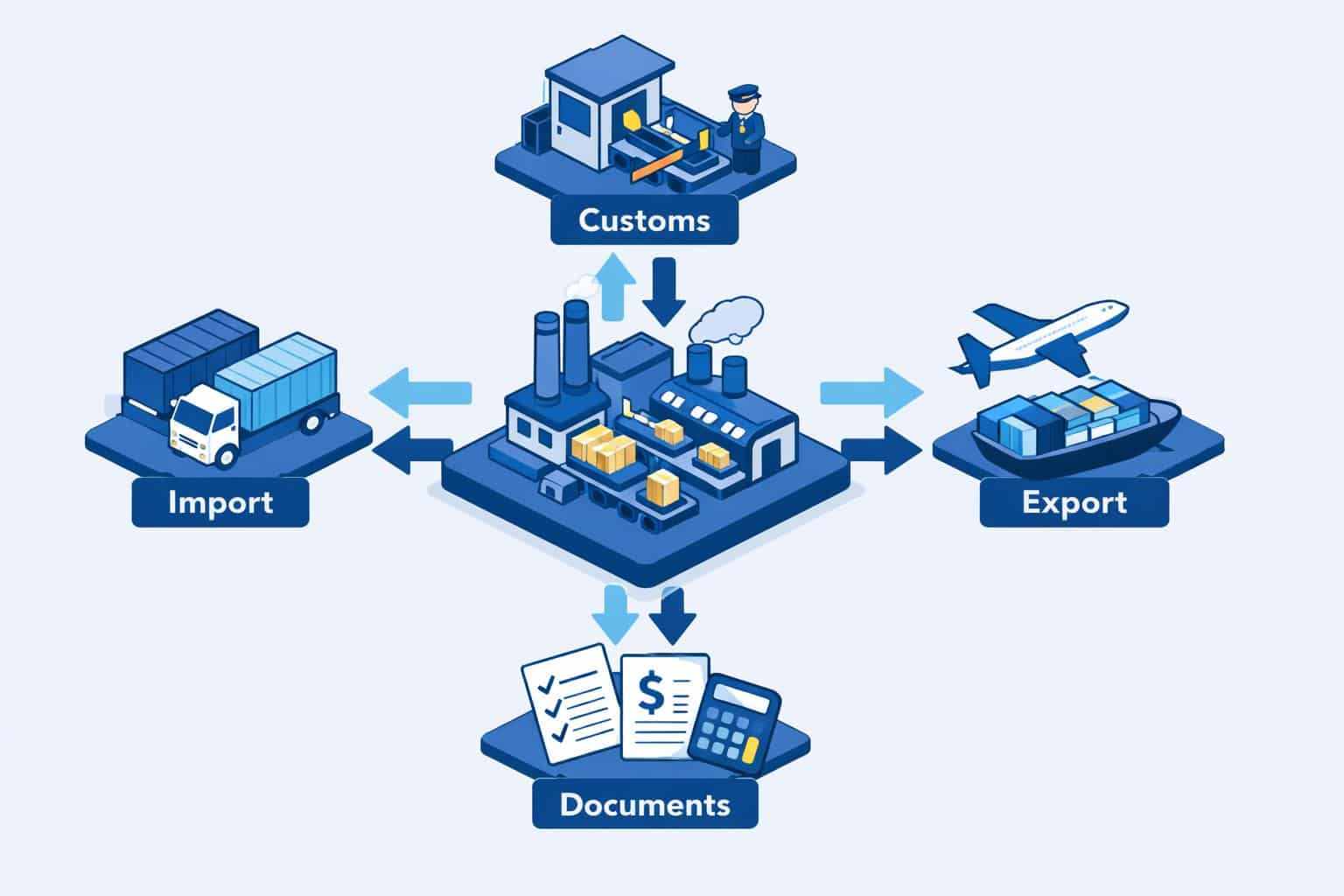
Why IMMEX Matters for Nearshoring Operations
The convergence of record FDI flows, evolving trade dynamics, and México’s manufacturing infrastructure makes IMMEX a critical instrument for companies evaluating production in the country.
México attracted a record $40.87 billion in foreign direct investment in 2025, reflecting sustained growth. Manufacturing accounts for a significant share of those flows. New investment — as opposed to reinvested earnings — has grown substantially in recent years, confirming that fresh capital for new facilities is driving much of the growth. Cumulative FDI has increased markedly, underscoring México’s strengthening position as a manufacturing destination.
For companies entering through the shelter modality, IMMEX provides the legal vehicle that makes rapid market entry possible. Rather than spending 8 to 12 months incorporating a Mexican entity, obtaining an independent IMMEX permit, building an administrative team, and establishing compliance systems, manufacturers can begin producing under an existing shelter provider’s IMMEX registration — leveraging established customs infrastructure, trained compliance teams, and proven Annex 24 systems.
The growing complexity of the regulatory environment — 170 program cancellations, 600+ suspensions, new criminal liability provisions, and IMMEX 4.0 on the horizon — has paradoxically strengthened the shelter model’s value proposition. Companies that treat IMMEX compliance as an afterthought face an environment where enforcement is increasingly automated, audit scrutiny is intensifying, and the operational cost of non-compliance has escalated from administrative fines to potential criminal proceedings.
American Industries has operated under the IMMEX framework for over 50 years, managing shelter operations across 10 regions in México with hundreds of companies supported over its long history. That institutional depth — in customs operations, Annex 24 systems, IVA/IEPS certification management, and SAT compliance — represents the kind of operational infrastructure that distinguishes experienced providers in an environment where regulatory margins for error continue to narrow.