IMMEX & PROSEC: Technical Guide for Chinese Manufacturers

📅 July 24, 2026

🖋️ AIG Insights Team

Precision-machined metallic component double-exposed with the stylized silhouette of Mexico, representing IMMEX and PROSEC manufacturing programs

Executive Summary

For Chinese manufacturers modeling a Mexican operation, two federal programs — IMMEX and PROSEC — determine whether imported inputs enter at a standard MFN duty rate or a sharply reduced preferential rate. IMMEX allows temporary duty-free importation of inputs, components, and machinery for export-oriented manufacturing, while PROSEC reduces the underlying tariff on specified inputs by HS fraction across covered industrial sectors, regardless of whether finished goods are exported or sold domestically. Stacked correctly, the two programs can move a Chinese-origin input from a high MFN rate toward an eliminated or near-zero preferential rate.

The discipline is fraction-level precision: every input must be mapped to its eight-digit Mexican HS fraction, validated against the current Diario Oficial de la Federación annex, and confirmed against ongoing compliance obligations — Annex 24 inventory control, IMSS registration, and monthly INEGI reporting — that must function from day one. For manufacturers entering through a shelter model, these registrations and compliance architectures are managed by the operator, compressing time-to-market and eliminating the need to build a compliance infrastructure from zero.

KEY TAKEAWAYS

  • Map every imported input to its eight-digit Mexican HS fraction before committing to a supply chain — PROSEC savings vary by exact fraction.
  • IMMEX defers duty on temporary imports for export; PROSEC reduces the baseline tariff on inputs sold domestically — use both programs together for full coverage.
  • Budget mandatory employer burden at roughly a third above base salary, and confirm IMSS risk class and state payroll tax rates before finalizing your labor cost model.
  • Do not add PTU to a salary-based labor-cost total — profit sharing is calculated on taxable profit, and double-counting will overstate your operating cost.
  • Entering Mexico under an existing shelter operator's IMMEX and PROSEC registrations eliminates the need to build compliance architecture from zero before production begins.

IN THIS ARTICLE

Precision-machined metallic component double-exposed with the stylized silhouette of Mexico, representing IMMEX and PROSEC manufacturing programs

Why These Two Programs Decide Your Landed Cost in Mexico

For a Chinese company modeling a Mexican operation, the difference between profit and loss often sits in two federal programs. IMMEX (Industria Manufacturera, Maquiladora y de Servicios de Exportación) and PROSEC (Programas de Promoción Sectorial) determine whether your imported inputs enter at the standard most-favored-nation duty rate, a higher surcharge-level rate, or a sharply reduced preferential rate — with the spread between scenarios representing a material share of landed cost.

Both programs carry precise legal mechanics, filing requirements, and ongoing obligations. Reading them correctly at the modeling stage prevents costly assumptions later.

Finance professional reviewing landed cost model with manufacturing floor visible in background

What IMMEX Actually Does

The IMMEX program (Decreto IMMEX) lets a qualifying company temporarily import inputs, components, machinery, and equipment without paying import duties — and without paying VAT if the company holds VAT/IEPS certification. The condition is that those goods feed a manufacturing, repair, or service operation oriented toward export. The program is administered by the Ministry of Economy (Secretaría de Economía) with customs oversight by SAT.

The mechanism is temporary importation, not exemption. Raw materials, parts, and packaging enter Mexico duty-free and must be returned, exported, transferred, or regularized within the term set by the Customs Law. Machinery and equipment may remain under the temporary regime for as long as the IMMEX authorization stays valid.

The export discipline is not optional. The IMMEX decree conditions the authorization on sustained export activity, with the specific sales threshold set out in the decree itself. A company that falls below the required export level puts its authorization at risk, so the export commitment must be verified against the current decree text at the modeling stage.
  • Duty-Free Input Categories: Raw materials, parts, components, packaging, and containers used to produce export goods, plus machinery and equipment directly used in the production process.
  • Residence Time for Inputs: Raw materials and components may remain in Mexico for a defined period before they must be exported, transferred, or converted to definitive import. The exact term is set by the Customs Law and varies by input type.
  • Residence Time for Equipment: Machinery and equipment carry no fixed month cap; they stay under the temporary regime as long as the IMMEX authorization remains valid and compliant. The obligations run continuously. Companies must maintain an automated inventory control system under Annex 24, provide customs authorities the access to that system required by current SAT rules, submit monthly statistical reporting to INEGI, and link all registered personnel to the production process through IMSS. Because the access and reporting rules are periodically updated, confirm the current requirements directly with SAT before filing. IMMEX is not a marginal regime. INEGI’s IMMEX establishment series tracks thousands of active operations employing well over two million workers, making it the backbone of Mexico’s manufacturing export base. > “IMMEX operations account for the majority of Mexico’s manufacturing exports, concentrating in automotive, electronics, and machinery production.” > — INEGI, IMMEX Manufacturing Statistics
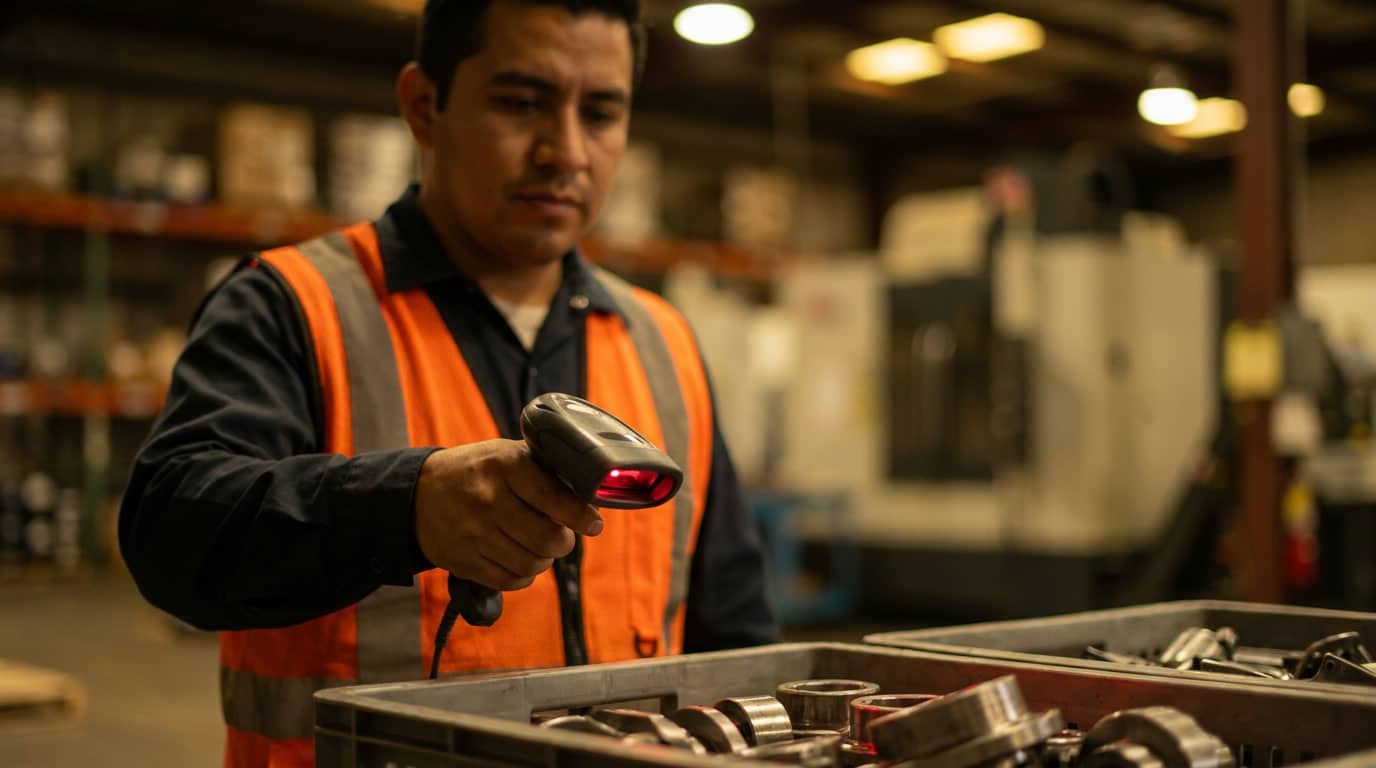
Logistics worker scanning incoming industrial components at a receiving station under the IMMEX temporary importation regime

What PROSEC Adds

PROSEC addresses a different problem than IMMEX. It grants preferential import tariffs on specified inputs by industrial sector — and it applies whether the finished product is exported or sold inside Mexico. IMMEX is export-oriented; PROSEC is not.

The structure matters for accurate modeling. PROSEC covers a defined set of industrial sectors published in the Diario Oficial de la Federación, and the decree is amended periodically. There is no single rate per sector. The preferential tariff is set per HS fraction (fracción arancelaria): many covered fractions qualify for duty-free treatment, while others carry low single-digit ad valorem rates according to the current PROSEC annexes. The range spans from full elimination to modest reductions, depending on the specific fraction.

The practical consequence is precise. You cannot look up “the automotive PROSEC rate.” You must map each imported item to its eight-digit Mexican HS fraction, confirm that fraction appears in the current PROSEC annex for your registered sector, and read its assigned rate.
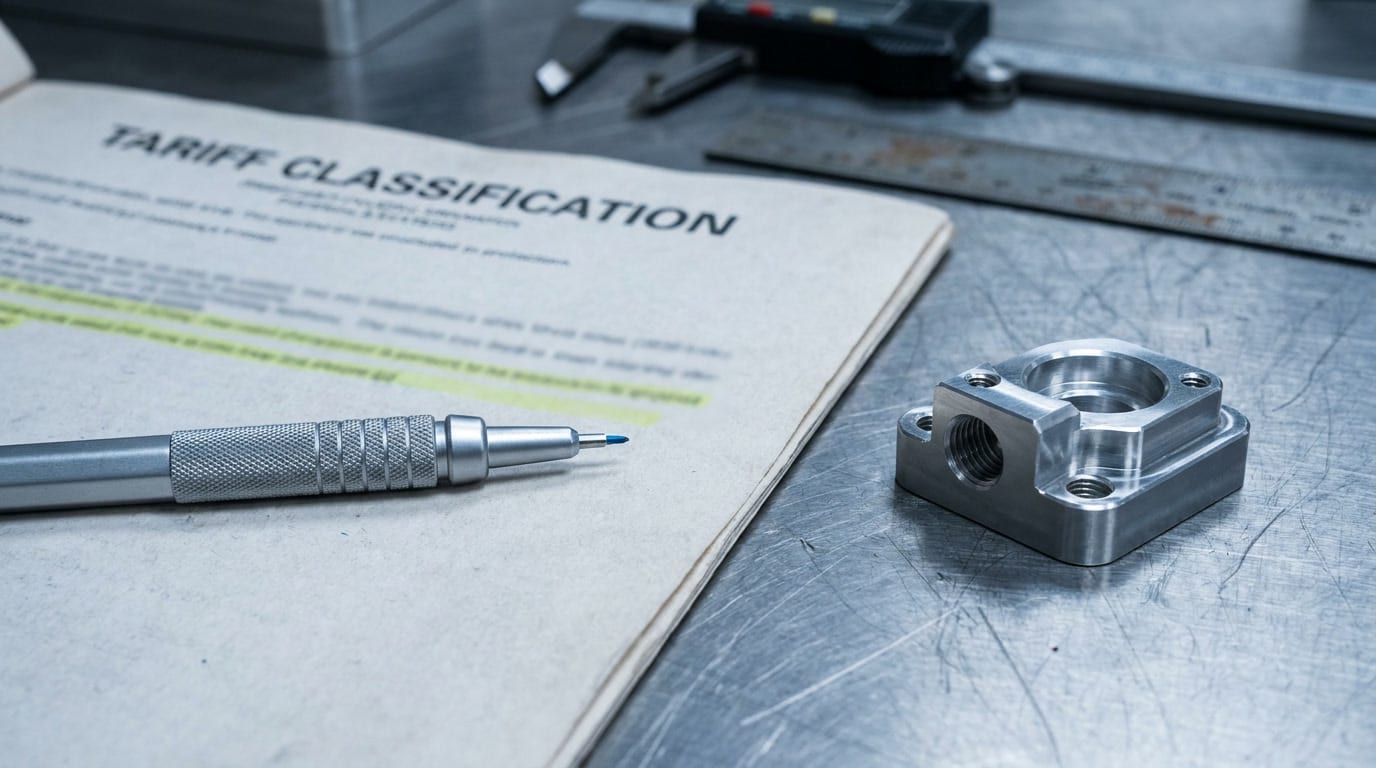
Printed tariff schedule with highlighted HS fraction line beside a precision-machined component, representing PROSEC tariff reduction analysis

Which Industries Qualify

The PROSEC sectors most relevant to Chinese manufacturers concentrate in four verticals: electronics and computing, automotive and auto parts, aerospace-adjacent categories, and machinery and equipment.

  • Electronics — The Fastest-Moving Vertical: Electronics is among Mexico’s largest export categories, and PROSEC annexes cover semiconductors, PCBs, telecom equipment, and sensors. For electronics manufacturing services and semiconductor-adjacent operations, the discipline is to code inputs to fractions that appear in both the IMMEX and electronics PROSEC annexes.
  • Automotive — The Largest Export Segment: The automotive vertical is Mexico’s single largest manufacturing export sector. PROSEC continues to allow low-tariff imports of steel, powertrain components, in-vehicle electronics, and interior plastics for automotive suppliers and component manufacturers.
  • Aerospace — Cross-Program Coverage: Aerospace manufacturers qualify through general programs — electronics PROSEC for avionics, machinery and equipment for tooling, metal-mechanic for airframe components. Mexico’s aerospace exports have grown steadily and rank the country among the leading aerospace suppliers to the US market.
  • Machinery and Equipment: Covering tooling, industrial automation components, and production-line equipment critical to capital-intensive manufacturing operations.
Electronics technician assembling a PCB at a production workstation, representing PROSEC-covered electronics manufacturing in Mexico

Combining IMMEX and PROSEC: A Worked Example

The two programs stack. IMMEX defers or exempts duty on temporary imports destined for export; PROSEC reduces the underlying IGI (Impuesto General de Importación) rate on the same inputs, protecting the operation when goods are sold domestically or when duty must be crystallized.

Consider an automotive manufacturer importing rolled steel that faces a general IGI duty without PROSEC. Under the automotive PROSEC sector, the applicable fraction may qualify for a sharply reduced or eliminated rate. On a recurring shipment, the difference between the general rate and the PROSEC rate compounds across a full year of imports.

Supply chain analyst reviewing a duty rate comparison document with rolled steel production visible in background

The Application Process

Applications for IMMEX are filed electronically with the Ministry of Economy through VUCEM (Ventanilla Única de Comercio Exterior Mexicano). The company must be a Mexican legal entity with an active RFC, an advanced electronic signature (e.firma), and the favorable SAT tax-compliance opinion required by the program rules.

The filing itself is document-heavy. It must include the description of manufacturing processes, evidence of installed production capacity, the tariff classifications for goods to be imported and exported, proof of legal possession of the facility with photographs, export contracts or purchase orders, and an investment program detailing layouts, planned headcount, and estimated volumes.

  • Corporate Prerequisites: A Mexican legal entity (S.A. de C.V. or S. de R.L. de C.V.), active RFC, e.firma, and the SAT compliance opinion required for the applicant company and its partners.
  • Operational Evidence: Proof of export capacity, supply or manufacturing contracts showing project continuity, and suitable physical facilities. A minimum registered workforce is commonly expected, so confirm the current requirement with the Ministry of Economy.
  • Compliance Architecture: Annex 24 inventory control with the access authorities require, IMSS registration linking personnel to production, and monthly INEGI reporting — expected to function from day one. Approval timelines depend on the complexity of the operation and the completeness of the file; expect the review to run over several weeks to a few months. Sensitive goods — steel, aluminum, textiles, sugar — are subject to additional customs controls that extend planning, and the specific thresholds and bond requirements should be confirmed against current SAT rules for those categories. PROSEC registration is a separate filing tied to your sector and confirmed HS fractions. The two programs are commonly pursued together, with the HS mapping done once and applied to both.
Compliance professional submitting an IMMEX application electronically with supporting documents on desk

The Labor Cost Line Most Models Get Wrong

Duty savings are only part of the internal case. The second line CFOs underestimate is statutory employer cost, and the error is usually double-counting.

Budget mandatory employer burden at roughly a third above base salary. Combining IMSS, INFONAVIT, SAR, and state payroll tax, government contributions add on the order of a third above base salary for a typical manufacturing risk class. That figure carries assumptions — IMSS risk class, salary level, and workforce age all move it — so treat it as a planning band and validate the rates with IMSS and your state authority.

One caution: PTU (profit sharing) is calculated as a statutory share of taxable profit, not a percentage of salary. Do not add it to a salary-based labor-cost total, or your model will overstate cost. The applicable rate is set by federal labor law and should be confirmed against the current Ley Federal del Trabajo text.

  • IMSS employer contribution: varies with risk class and contribution base
  • INFONAVIT: a fixed percentage of the contribution base, set by law
  • SAR retirement: a smaller fixed percentage of the contribution base
  • State payroll tax: varies by state; confirm the applicable rate with the relevant state treasury

For wage floors and currency conversion, model against the current CONASAMI minimum wage for the general and northern border zones, and convert using the current Banxico FIX rate. Both figures are updated regularly, so pull the live values when finalizing the model.

HR specialist reviewing statutory employer cost breakdown with production floor workers visible in background

How American Industries Manages These Programs

The gap between reading these rules and operating under them is where most first-time entrants lose time. Under the shelter model, the Chinese company runs production while the shelter operator holds the IMMEX and PROSEC registrations, maintains Annex 24, files the INEGI reports, and manages IMSS compliance and customs traceability.

This is where operational depth is measurable. American Industries Group brings more than five decades of operational experience supporting over 300 foreign manufacturers across 17 industrial parks and 10 operating regions. That footprint means the HS mapping, VUCEM filing, and ongoing compliance are handled by teams that manage these programs daily.

For a Chinese CFO, the structural value is entering the market under an existing compliance architecture rather than building one from zero. The return-rate thresholds, bond requirements, and Annex 24 audits become the operator’s operational responsibility, defined in the service agreement.

Two manufacturing operations professionals reviewing a compliance checklist at a production site with active equipment in background

Conclusion

IMMEX and PROSEC are not interchangeable. IMMEX defers duty on temporary imports for export; PROSEC lowers the underlying tariff on your inputs by HS fraction across the covered sectors, whether you export or sell domestically. Stacked correctly, they can move a Chinese-origin input from a high MFN duty rate toward a sharply reduced or eliminated preferential rate.

The decision hinges on precision — every input mapped to its eight-digit HS fraction, every fraction checked against the current DOF annex, every compliance obligation running from day one. For a Chinese manufacturer building the internal business case, the next step is a fraction-by-fraction review of your actual input list against both program annexes to quantify the real savings for your operation.


IN THIS ARTICLE

KEY STATS

  • IMMEX operations employ well over two million workers in Mexico
  • IMMEX accounts for the majority of Mexico's manufacturing exports
  • American Industries Group supports over 300 foreign manufacturers
  • AIG operates across 17 industrial parks and 10 operating regions in Mexico
  • Mandatory employer burden adds roughly one-third above base salary in Mexico

Frequently Asked Questions

A Chinese manufacturer can hold IMMEX and PROSEC registrations directly, provided it establishes a Mexican legal entity (S.A. de C.V. or S. de R.L. de C.V.) with an active RFC, e.firma, and a favorable SAT tax-compliance opinion. The alternative is to operate under a shelter operator's existing registrations, which transfers the compliance obligations — Annex 24, IMSS, INEGI reporting, and customs traceability — to the operator and allows production to begin under an established compliance architecture rather than building one from zero.
If finished goods are sold domestically rather than exported, the temporarily imported inputs must be regularized — meaning the deferred import duty is recognized and paid. This is precisely where PROSEC adds value: by reducing the underlying IGI tariff rate on those inputs by HS fraction, PROSEC lowers the duty that crystallizes when goods are sold in Mexico, protecting the operation's landed cost even when the export discipline of IMMEX cannot be applied.
PROSEC annexes are amended periodically through publications in the Diario Oficial de la Federación (DOF), and there is no fixed update schedule. Manufacturers should monitor DOF publications directly and validate their HS fraction list against the current annex before each major procurement or supply chain decision. Relying on a prior-year annex without verification risks applying an outdated rate that may have changed.
Annex 24 is the automated inventory control system that IMMEX-authorized companies must maintain to track all temporarily imported goods — inputs, components, and machinery — from entry through transformation, export, or regularization. SAT requires that customs authorities have access to this system under current rules. Without a functioning Annex 24, a company cannot demonstrate that temporarily imported goods are being used as declared, putting the IMMEX authorization at risk of suspension or cancellation.
Yes. The IMMEX decree conditions the authorization on sustained export activity, with the specific sales threshold defined in the decree itself. A company that falls below the required export level puts its authorization at risk. Because the threshold is set in the decree text and may be updated, manufacturers must verify the current requirement directly against the published Decreto IMMEX rather than relying on secondary sources.
Yes, the two programs stack. IMMEX defers or exempts duty on inputs temporarily imported for export, while PROSEC reduces the underlying IGI tariff rate on those same inputs by HS fraction. When goods are ultimately exported, IMMEX handles the duty deferral; when duty must be crystallized on domestic sales, the lower PROSEC rate applies. The combined effect is maximum duty protection across both export and domestic-sale scenarios, provided each input's HS fraction is validated against both program annexes.

Sources & References

  • Secretaría de Economía — Decreto IMMEX (Industria Manufacturera, Maquiladora y de Servicios de Exportación)
  • Secretaría de Economía — PROSEC (Programas de Promoción Sectorial) Decree
  • Diario Oficial de la Federación — PROSEC Annexes (current edition)
  • SAT (Servicio de Administración Tributaria) — IMMEX Customs Oversight and Annex 24 Rules
  • INEGI — IMMEX Manufacturing Statistics (Estadística de la Industria Manufacturera, Maquiladora y de Servicios de Exportación)
  • VUCEM (Ventanilla Única de Comercio Exterior Mexicano) — Electronic Filing Portal
  • IMSS (Instituto Mexicano del Seguro Social) — Employer Contribution Schedules
  • INFONAVIT — Employer Contribution Rules
  • CONASAMI — Minimum Wage Tables (General and Northern Border Zones)
  • Banxico — FIX Exchange Rate (Tipo de Cambio FIX)
  • Ley Federal del Trabajo — PTU (Profit Sharing) Statutory Rate
  • American Industries Group — Shelter Program Operations Data
  • AIG Editorial Team

    Written by

    AIG Insights Team

    Editorial & Research Team

    The AIG Insights Team draws on over 50 years of operational experience across 10 regions in Mexico to deliver data-driven analysis on manufacturing, nearshoring, and trade policy. Our editorial team combines on-the-ground expertise from supporting 300+ companies with current market intelligence to help decision-makers navigate Mexico's evolving industrial landscape.

Go to Top